Use code SUMMERPRACTICE for a 25% discount on all On Demand Courses through August 31.

Daily Meditation Recordings, with Antonia Sumbundu – Week of 24 February, 2025

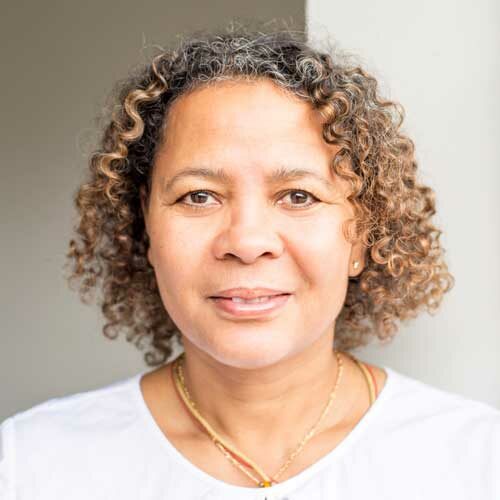
Antonia Sumbundu

Antonia Sumbundu

We are delighted to have Antonia Sumbundu leading our Daily Meditation sessions this week. May these sessions support and enrich your practice.


This week’s theme is: Compassion in Action, Wisdom in Practice – Living the Six Paramitas


This week we will be exploring how the Six Paramitas offer a pathway to living with more awareness, wisdom, and compassion by nourishing the qualities of generosity, integrity, patience, diligence, collectedness, and wisdom. Each day focuses on one or two paramitas, combining instructions for our sitting practice and reflections on how to integrate these qualities into daily life.


Our Dharma Library thrives through collective generosity. Your donation helps sustain this offering for our entire community.

Generosity

February 24, 2025

Ethical Conduct

February 25, 2025

Patience

February 26, 2025

Joyful Effort

February 27, 2025

Anais Nin Quote: The value of the personal relationship to all things is that it creates intimacy and intimacy creates understanding and understanding creates love.

Meditation and Wisdom

February 28, 2025

If you are a poet, you will see clearly that there is a cloud floating in this sheet of paper. Without a cloud, there will be no rain; without rain, the trees cannot grow: and without trees, we cannot make paper. The cloud is essential for the paper to exist. If the cloud is not here, the sheet of paper cannot be here either. So we can say that the cloud and the paper inter-are.

“Interbeing” is a word that is not in the dictionary yet, but if we combine the prefix “inter” with the verb “to be”, we have a new verb, inter-be. Without a cloud, we cannot have paper, so we can say that the cloud and the sheet of paper inter-are.

If we look into this sheet of paper even more deeply, we can see the sunshine in it. If the sunshine is not there, the forest cannot grow. In fact nothing can grow. Even we cannot grow without sunshine. And so, we know that the sunshine is also in this sheet of paper. The paper and the sunshine inter-are. And if we continue to look we can see the logger who cut the tree and brought it to the mill to be transformed into paper. And we see the wheat. We know that the logger cannot exist without his daily bread, and therefore the wheat that became his bread is also in this sheet of paper. And the logger’s father and mother are in it too. When we look in this way we see that without all of these things, this sheet of paper cannot exist.

– Thich Nhat Hanh –

Discussion

Leave a Reply

Discover more from the Dharma Library

  • The Individual-Relational Dharma Paradox and Why it Matters to Your Life

    Biologically, psychologically, and in common sense there is no doubt that the human experience is both intrinsically individual and intrinsically relational. Our bodies are separate. You will never directly know my inner universe. Also, our bodies evolved to relate. The brain is a relational organ. Our sense of safety and joy, suffering and inquiry, has…

    Read More

  • Sitting with Pointlessness – Living with Potentiality

    During a recent retreat, the teachers’ instruction was to hold the question ‘What is this?’ in mind. While sitting on the cushion, the thought struck me that my life is futile! I am genetically programmed for survival and sex; everything else is just distracting window-dressing. This talk will explore the journey from the apparent ‘futility’…

    Read More

  • Daily Meditation Recordings, with Jaya Rudgard – Week of Jan 31, 2022

    Embodied and Awake: Meditations for Body, Heart and Mind.

    Mind, body and emotion form a constant feedback loop. As the traditional teachings on mindfulness make clear, all three equally deserve our interested, caring attention. When mindfulness is balanced in this way our whole being benefits. Our practice this week will include some gentle movements and mindful breathing practices as a prelude to each day’s meditation. These can be done seated or standing, or adapted for lying down, according to your ability and levels of energy.

    Each morning this week we’ll dive into one of the images from the natural world and daily life that the Buddha used to explain his teachings. Let’s see how how these similes and metaphors from the Buddhist texts can support our understanding and enrich our practice. We may also discover how practising with them can enhance our appreciation of the world around us.

    Read More