Use code SUMMERPRACTICE for a 25% discount on all On Demand Courses through August 31.

How can I Sink when I am the Ocean?

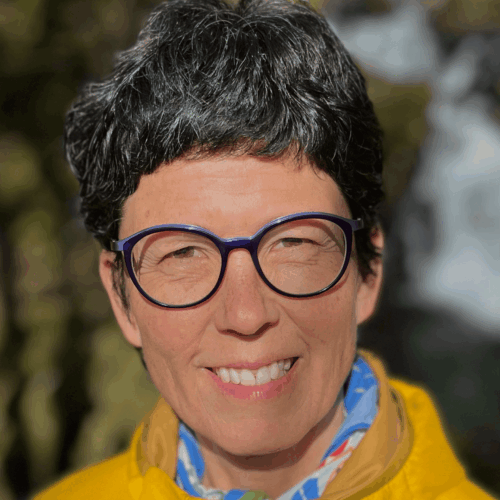
With Christelle Bonneau recorded on June 10, 2018.

Found our teachings useful? Help us continue our work and support your teachers with a donation. Here’s how.

In this session we explore more precisely the different individuals we think we are through the days. We will try to recognize them better, with their own feelings, sensations, emotions, thoughts and states of mind. We’ll also try to hear more clearly all the different judgemental voices that take place in us, about the way we are.

The better we identify them, the more we’ll come back naturally to the identifier, the spacious consciousness we really are.

We are our home, our welcoming land, free and unaffected by passing experiences. From that grounded and secure place, we’ll see how we can welcome all these different individulas, faces, voices, and love them, dance with them, leave them, transform them or just let them be, gently and lightly, in the light of freedom, empathy and wisdom.

Listen to the audio version below, or click here to download the mp3.

Discussion

Leave a Reply

Discover more from the Dharma Library

  • Nourishing Compassion

    His Holiness the Dalai Lama has shared that compassion is not a luxury but a necessity for human beings to survive. There is no more important time to understand and strengthen compassion than right now.

    Read More

  • Justine Dawson

    The Dharma of Sex and Intimacy

    Do your dharma insights seem to fall apart in the face of romantic connection? Are you wondering what mindfulness means when it comes to sex and intimacy? As a monastic, the Buddha had little to teach on this topic, but as modern practitioners we can engage our practice to deepen our relationships and experience a…

    Read More

  • The Individual-Relational Dharma Paradox and Why it Matters to Your Life

    Biologically, psychologically, and in common sense there is no doubt that the human experience is both intrinsically individual and intrinsically relational. Our bodies are separate. You will never directly know my inner universe. Also, our bodies evolved to relate. The brain is a relational organ. Our sense of safety and joy, suffering and inquiry, has…

    Read More

  • Brian Dean Williams

    S.A.L.S.A.: Using Buddhist practice to Respond to “Spicy” Emotions

    Life presents plenty of opportunities to react unconsciously, often creating harm for ourselves and others. How might we apply our Buddhist practice to “Spicy” situations and emotions, in order to respond wisely? In this session, Brian will draw on Stephen Batchelor’s work and propose a working acronym of “S.A.L.S.A.” to navigate life’s spiciness and act…

    Read More

  • Vimalasara Mason-John

    Sitting With Our Ancestors

    In times of struggle we can always call on the ancestors. Our affinity ones are just as important as our biological ones. The Buddhist path is full of affinity beings who inspire us. Join me in remembering those who have gone before us, and paved the path of freedom and liberation.

    Read More

  • Stephen Fulder

    The Dharma on the front lines: how to work with conflict.

    Peace sometimes feels impossible to find. It is there for a while then something happens and conflict or friction returns. It may be conflict with ourselves, in relationships to people close to us, at our work place, or between social groups. Often we can feel despaired that despite much dharma practice and meditation, conflict keeps…

    Read More

  • Nathan Glyde

    Daily Meditation Recordings, with Nathan Glyde – Week of March 21, 2022

    This week’s topic is: Harmonising Our Life. The Buddha’s wisdom highlights how we often live entangled in stress and distress. The earliest mentions of this disharmonious state called it being in an argument with life. Dharma teachings invite us away from habitual rigidity and reactivity into a responsive and harmonising release. This week we will uncover deeper and more creative ways of attuning to life that support inner and outer freedom and well-being.

    Read More