Use code SUMMERPRACTICE for a 25% discount on all On Demand Courses through August 31.

How do we stay connected to the essence of practice through life’s changing forms?

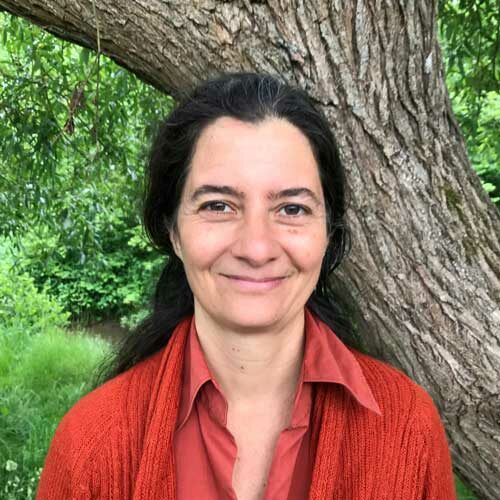
With Christelle Bonneau recorded on September 17, 2017.

Found our teachings useful? Help us continue our work and support your teachers with a donation. Here’s how.

How do we keep meditation practice alive, both firm enough and flexible enough to respond to our changing needs, health issues and practical considerations? How do we stay connected to the essence of practice day-to-day, and make peace inside with reality as it actually is?

In this session we explore a few different forms of meditation, and a few postures and micro-practices that can be used at any time in the day. Above all, we clarify what makes a real, honest and engaged practice, that goes beyond physical postures and sitting meditation, to meet life’s difficulties with an aware and loving attitude towards oneself and others.

We look at the vision we have of things and the quality of the relationship we have with life, and we reflect on the way we are affected by the experiences we create out of them.
Listen to the audio version below, or click here to download the mp3.

Discussion

Leave a Reply

Discover more from the Dharma Library

  • Bart van Melik

    Wise Mindfulness will Protect You

    Awareness isn’t something you make. It’s already here when you pause and notice. Mindfulness knows the good and helps it grow happily. It also knows the difficult and helps us hold it with care. Join us to explore how wise mindfulness protects us, bringing kindness and wisdom to each moment.

    Read More

  • A Relational Dhamma Integrates the Arahat and Bodhisattva Visions of the Buddhist Path (and why this matters to our living Dhamma path)

    Gregory writes: “The early Buddhist vision of the arahat ideal is sometimes taken to imply that individual awakening is the sole aim of the Path whereas the later Buddhist vision of the bodhisattva ideal centers on the liberation of all beings. The gap between practice aimed at solitary awakening and practice aimed at liberation of…

    Read More

  • Dave Smith

    Understanding and developing Citta (heart-mind)

    All schools of Buddhism acknowledge that the development of Citta is an essential aspect of the awakening process. Within classical Mindfulness teachings, it encompasses the entirely of the third foundation of practice. At its core, it encourages us to recognize the presence and absence of greed, hatred and delusion. In its fruition it points to…

    Read More

  • Toby Sola

    The Out Breath: Unlocking Concentration

    Shodo Harada Roshi is known as a “teacher of teachers”, with masters from various lineages coming to sit with him in Japan. If you went to Harada’s monastery, the main meditation technique you’d learn involves slowing the out breath to last one minute. This drastically slows down your physiology, which in turn settles the mind.

    Read More

  • Nathan Glyde

    Getting Free: The Infinite Middle of the MiddleWay

    Dharma teachings are sublime, subtle, and onward leading: they are always going deeper and wider than we may first presume. Yet, they also meet us where we are, in the midst of our life. In this session we’ll explore two expressions of the middle-way we can cultivate and develop in our practice and in our…

    Read More

  • Nathan Glyde

    Daily Meditation Recordings, with Nathan Glyde – Week of July 18, 2022

    This week’s topic is Perfectly Imperfect. “True perfection seems imperfect, yet is perfectly itself.” – Lao Tzu. Expecting life to be perfect is stressful: a beautiful goal like “getting it right” prevents us from developing when it morphs into “never getting anything wrong.” The non-harming noble-truths path of the Dharma may arouse perfectionism, but if carefully followed, can set us free from such entrapment.

    Read More