Use code SUMMERPRACTICE for a 25% discount on all On Demand Courses through August 31.

A Relational Dhamma

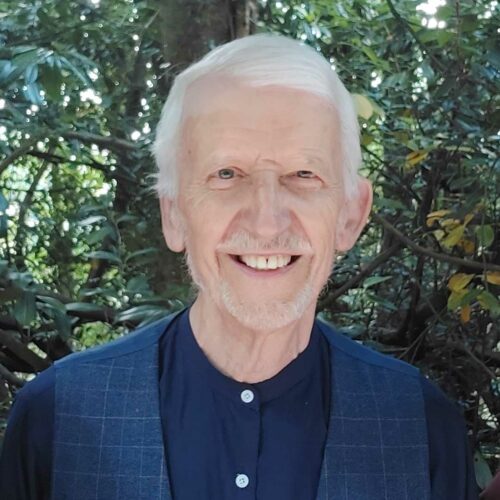
With Gregory Kramer recorded on October 17, 2021.

Found our teachings useful? Help us continue our work and support your teachers with a donation. Here’s how.

If humans are intrinsically relational creatures, how do we integrate this understanding with the Buddha’s teachings on suffering and its cessation? Relational suffering and craving? Dependent origination?

In this session, we explore the power and necessity of a relational understanding of the Buddha’s teachings. We discuss and practice relational aspects of the path, including the relational Vipassana practice of Insight Dialogue, and living a Dhamma-infused life of relatedness, through friendship and community.


Listen to the audio version below, or click here to download the mp3.

Discover more from the Dharma Library

  • Zohar Lavie

    Daily Meditation Recordings, with Zohar Lavie – Week of May 1, 2023

    This week’s topic is “A Path of Wisdom and Compassion”. Practicing Insight Meditation supports an understanding of how wellbeing is nourished, and how ill-being is conditioned. Attending to our own heart and mind with compassion and wisdom opens possibilities of freedom. Over this week of practice, we’ll develop wisdom and compassion, exploring creative responses to habits that appear to obscure these beautiful qualities.

    Read More

  • Daily Meditation Recordings, with Ulla Koenig – Week of June 7, 2021

    This week’s theme is: Mudita – Celebrating Aliveness. Our hearts possess infinite capacities: they can express friendship in the most surprising circumstances and turn with tenderness and care to those who suffer. But aside from kindness and compassion, there is also the potential for deep appreciation, ease, delight and joy within us. While such perspectives are always available, the access might be blocked by voices of doubt, shame or negativity. In the upcoming weekly sessions, we strengthen our capacity to find nourishing perspectives and to rejoice in the beauty within and around us with the help of guided meditations and practices for everyday life.

    Read More

  • The Individual-Relational Dharma Paradox and Why it Matters to Your Life

    Biologically, psychologically, and in common sense there is no doubt that the human experience is both intrinsically individual and intrinsically relational. Our bodies are separate. You will never directly know my inner universe. Also, our bodies evolved to relate. The brain is a relational organ. Our sense of safety and joy, suffering and inquiry, has…

    Read More

  • The Path of the Bodhisattva: Choosing a Life of Kindness

    The path of the Bodhisattva asks us to dedicate ourselves to the well-being of all sentient beings – to show up as best as we can for ourselves, each other, and the natural world with a quality of no-matter-whatness. It’s an impossible though necessary task. Yet the teachings and practices of everyday dharma offer accessible,…

    Read More

  • Shaila Catherine

    Angulimala: an ethical transformation

    Shaila tells the life story of Angulimala and his transformation from notorious robber and murderer to a peaceful, compassionate, truthful, and awakened monk. It is an inspiring example of the power of restraint, and the potential for redemption. Habits and dispositions do not need to control our lives. We can stop unwholesome, unhealthy, and harmful…

    Read More

  • Brian Dean Williams

    Natural Wisdom

    In the modern world, it’s easy to forget our intimate connection with all of life. But with recent global events and movements, we’ve been both confronted and inspired by the deep impact our actions have on one another. From a Buddhist perspective, being aware is our true nature. What role might the natural world play…

    Read More

  • Who Am I?

    “Who Am I?” is a fundamental question. You have to live the question, day in and day out. You cannot think through an answer. The self (‘I’ and ‘my’) lands on objects, voluntarily or involuntarily. Primary objects of interest include forms, feelings, perceptions, formations of mind/speech/body and consciousness (mindfulness, awareness, concentration and meditation). The self…

    Read More