Kaira Jewel Lingo
11/05/2020
“We are what we think.
All that we are arises with our thoughts.
With our thoughts we make the world.…
Your worst enemy cannot harm you as much as your own thoughts, unguarded.
But once mastered, no one can help you as much, not even your father or your mother.” —Buddha, from the Dhammapada
“When you become aware of silence, immediately there is that state of inner still alertness. You are present. You have stepped out of thousands of years of collective human conditioning.”–Eckhart Tolle
“Most people spend their entire life imprisoned within the confines of their own thoughts. They never go beyond a narrow, mind-made, personalized sense of self that is conditioned by the past.
In you, as in each human being, there is a dimension of consciousness far deeper than thought. It is the very essence of who you are.
Finding that dimension frees you and the world from the suffering you inflict on yourself and others when the mind-made “little me” is all you know and runs your life. Love, joy, creative expansion, and lasting inner peace cannot come into your life except through that unconditioned dimension of consciousness. Here is a new spiritual practice for you: don’t take your thoughts too seriously.” –Eckhart Tolle
Random Acts of Kindness Foundation
BCBS Compassion Course led by John Makransky
Gathas from the book Present Moment, Wonderful Moment:
Waking up
Waking up this morning, I smile.
Twenty-four brand new hours are before me.
I vow to live each moment deeply
and to look at all beings with the eyes of compassion.
Turning on the Water
Water flows from high in the mountains.
Water runs deep in the Earth.
Miraculously, water comes to us,
and sustains all life.
Brushing your Teeth
Brushing my teeth and rinsing my mouth,
I vow to speak purely and lovingly.
when my mouth is fragrant with right speech,
a flower blooms in the garden of my heart.
Meditation for Stopping and Deep Looking (shared due to the poor sound during the meditation):
Breathing in, I am aware that I am breathing in. Breathing out, I am aware that I am breathing out.
Breathing in, my breathe goes deep. Breathing out, my breath goes slow
Breathing in, I calm my body. Breathing out, I feel at ease.
Breathing in, I smile. Breathing out, I release all tension.
Breathing in, I allow my mind to relax Breathing out, I smile to my mind as it begins to relax
Breathing in, I quiet my mind and let go of thoughts, worries, judgments
Breathing out, I smile to my quiet mind
Breathing in, I see myself in this moment, sitting quietly, doing nothing
Breathing out, my mind is becoming more free, settled, calm
Nowhere to go, nothing to do
Breathing in, I feel light
Breathing out, I feel free
Breathing in, I am in touch with the emptiness of my mind
Breathing out, I smile to my mind as it becomes more empty
Breathing in, I see my fear about the future
Breathing out, I let it go or let it be
Breathing in, I see my worries, my irritation, my concerns, my exhilarations
Breathing out, I let them go, let them be.
Breathing in, I am enjoying dwelling in this present moment
Breathing out, I know this is a wonderful moment

Recorded :
In this session, we explore how our relationships are the very path of awakening and how we can show up fully in our interactions with others, especially those we find challenging. People we find difficult can teach us a great deal and we learn ways to practice with these painful relationships to profit from their…
This week’s theme is: The Abundant Middle-Way.
The Buddha in his last steps of awakening turned away from austerities and the practiced hardships he had endured. He did not turn back to the indulgences of his youth, but uncovered a kind and sensitive middle-way between a sense of self-importance and self-negation. The awakened one then invited others to a way of living between common extremes of views, states, and habitual actions.
This week we will walk the path of peace supporting the deep well-being and boundless heart of the middle-way.

Recorded :
As we enter the darker months of the year, consider the profound restoration and healing that darkness offers us— both physically and symbolically. Darkness is often considered the absence of light, but it is actually a vital and regenerative essence of nature and consciousness. This session is an experiential exploration of the interplay of light…
This week’s theme is: Resolve to Unbind the Heart
The word resolve can embody many meanings. This week we will see how much it offers on a Dharma path of awakening. It is made of re & solve: ‘re’ as in ‘really’, fully, with intensity; ’solve’ as in loosen, undo, or dissolve. Such a poetic and insightful combination: to intensely loosen.
The Buddha offered teachings and practices for a path of unbinding. A path of resolve to resolve, of dedication to undoing. For dukkha is a state of high activity and reactivity: a doing of distress. Meditations are practices of skilful and subtle activity that unbuild problematic senses of self and loosen missions of reactivity. An invitation to wake up to life, in life, for life, and there in the midst of it all to resolve: to fully unbind.
Recorded :
The Suttas, Sutras and Shastras tell us that we can dislodge and extinguish what the deluded mind has created. There is a common thread through them all… we should realize the emptiness of all conditioned phenomenon. Let’s step into this discussion together to look deeper into the mind that realizes emptiness as the gateway to…
Recorded :
What does the Dharma have to say about how we relate: to ourselves, to each other and to the environment? How might we touch in to the energizing potential of waking up together? This session will draw from the inherently relational practices of both the Zen koan tradition and Insight Dialogue to consider ways that…

Recorded :
As spiritual practitioners faced with the enormity of our world’s problems, we are often left wondering how our individual practice might make a tangible difference in our world. In this gathering, we will explore how contemplative technologies designed for realization of personal freedom can – and must – be applied collectively, delving into a deeper…
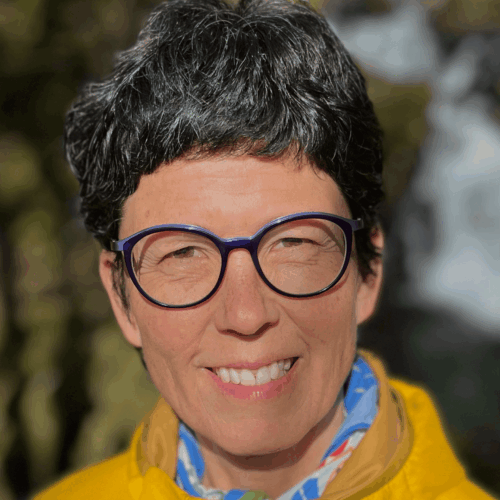
We’re delighted to have Jaya Rudgard guiding our Daily Meditation sessions this week. May these sessions support and deepen your practice.
This week’s theme is: Still Here, Still Now: Waking Up to Life
As we develop our ability to remain present to experience our insight into the nature of that experience deepens. We’ll continue to explore this week how mindfulness can lead not just to less stress here and now but to the kind of seeing that will eventually free the heart-mind from all its self-created suffering.
Our Dharma Library thrives through collective generosity. Your donation helps sustain this offering for our entire community.