Use code SUMMERPRACTICE for a 25% discount on all On Demand Courses through August 31.

Embracing the Radical Act of Rest

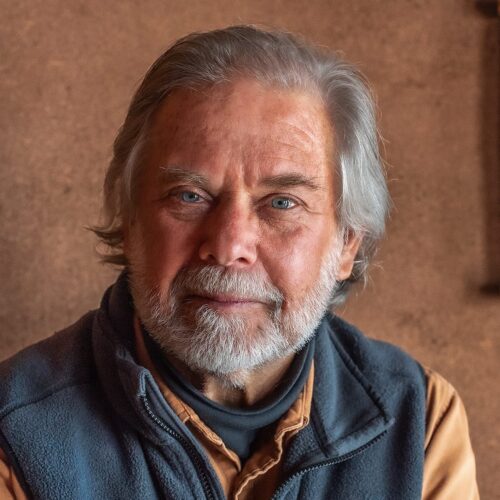
With Christopher Titmuss recorded on April 27, 2025.

Found our teachings useful? Help us continue our work and support your teachers with a donation. Here’s how.

In times of global challenges and uncertainty, we often respond with fear-driven action, guilt, or survival mode. Yet the simple act of resting offers a powerful path to liberation. By connecting with our bodies and trusting the ground beneath us, we cultivate ease that naturally supports the awakened mind.

When we act from deep rest, compassion, and inner freedom, we engage with life’s complexities more sustainably. Join us to explore what prevents deep rest and discover supportive practices for daily life. Together, we’ll practice embodied rest and share what helps us release inner struggle.

Listen to the audio version below, or click here to download the mp3.

Discussion

3 thoughts on “Embracing the Radical Act of Rest”

Leave a Reply

Discover more from the Dharma Library

  • Sophie Boyer

    Daily Meditation Recordings, with Sophie Boyer – Week of 02 November, 2026

    This week’s theme is: Reconnecting . How would “connection” feel if it was to become free from believing that somebody or something has to re-connect? This week, Sophie Boyer will explore how it feels to simply be – without the pressure of feeling like you must constantly do something or change who you are just to feel connected. Our Dharma Library thrives through collective generosity. Your donation helps sustain this offering for our entire community.

    Read More

  • Mindful of Race: Transforming Racism from the Inside Out

    Racism remains one of the most rooted and painful impasses of our time. Why is this so? And what does this have to do with you? In her talk, drawing from her recent publication, Ruth explores an understanding of our individual and collective racial conditioning and its social proliferation, and how mindfulness provides a foundation…

    Read More

  • The Nonduality of Good and Evil? Buddhist Reflections on War

    Ukraine…Gaza…Iran… Can Buddhist teachings help us understand and respond to these modern conflicts? Quotation: If only it were all so simple! If only there were evil people somewhere, insidiously committing evil deeds, and it were necessary only to separate them from the rest of us and destroy them. But the line dividing good and evil…

    Read More

  • Daigan Gaither

    Precepts as Orientation

    The 5 precepts often given to lay practitioners are (with positive instructions in parenthesis): I vow not to kill (Love and support all beings)I vow not to steal (generosity)I vow not to misuse sexuality (contentment)I vow not to lie (compassionate truthfulness)I vow not to intoxicate self or other (staying mindful) We can think of precepts…

    Read More

  • Right view – a path to liberation.

    The practice and realizaton of Right View is the first of the eightfold path. Holding to views and opinions is a sure way to suffering, says the Buddha. But can we live with no views at all? To realize Right View we have to look deeply into life, in order to free ourselves from wrong…

    Read More

  • Nathan Glyde

    Daily Meditation Recordings, with Nathan Glyde – Week of May 23, 2022

    This week’s topic is An Enigma Inside A Mystery. We typically freeze in amazement or feverishly search for causes when we suffer dukkha (life’s tension). We’ve probably all experienced how these reactions exacerbate the problem. The Buddha taught that dukkha is a puzzle that can be solved: it doesn’t have to be a mystery. We can learn the resolution that brings us from bewilderment to marvellous release by paying quiet attention to the pattern of the difficulty.

    Read More

  • Akincano M. Weber

    On Meeting Conflict and the Incompatible

    “When you can’t go forward, when you can’t go back, and when you can’t stand still – where do you go? This is your place of non-abiding. The things you love and the things you hate: these are your teachers.” – Ajahn Chah How do we perceive conflict? We often see it as disturbing, but…

    Read More