Use code SUMMERPRACTICE for a 25% discount on all On Demand Courses through August 31.

Genuine Happiness: An Alternative Perspective

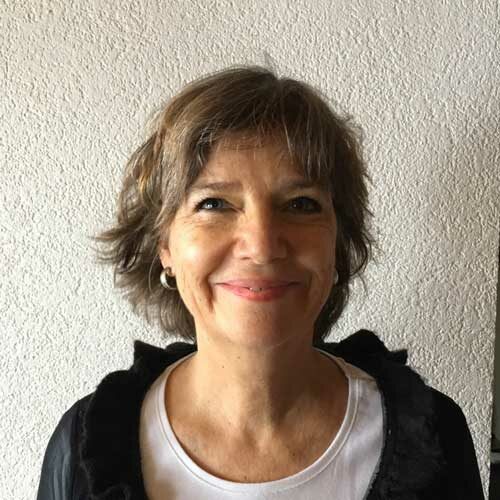
With Dave Smith recorded on July 14, 2019.

Found our teachings useful? Help us continue our work and support your teachers with a donation. Here’s how.

So much of what we hear and learn about within Dharma practice places an arguably unnecessary emphasis on suffering (dukkha). While the acceptance of suffering (dukkha) is an important and essential aspect of the path, it is by no means the end of the story.

In one of the Buddha’s oldest descriptions of what it means to awaken to the Dharma (noble quest: MN 26) he states that awakening is a subtle yet radical shift in perspective. A shift in priority that moves us from being pre-occupied with our “place” in the world, to a perspective of living from a “ground”.

This shift is accomplished by developing the four foundations of mindfulness.

As we progress in our practice this shift becomes more natural and available in the waking moments of our lives. As we learn to find balance and equanimity between the hedonic pleasures of the world and inner cultivation, we experience a more genuine happiness, (eudemonia in Greek) that is not rooted in what we get from the world, but rather how we are in the world. We become less focused on getting what we want, to an appreciation for what we have.

During the practice session Dave offers reflections from both the early Buddhist tradition and contemporary evidence found with happiness research. How can use our practice of the Dharma to create a genuine happiness for ourselves, for others and for this world?


Listen to the audio version below, or click here to download the mp3.

Discussion

Leave a Reply

Discover more from the Dharma Library

  • The Individual-Relational Dharma Paradox and Why it Matters to Your Life

    Biologically, psychologically, and in common sense there is no doubt that the human experience is both intrinsically individual and intrinsically relational. Our bodies are separate. You will never directly know my inner universe. Also, our bodies evolved to relate. The brain is a relational organ. Our sense of safety and joy, suffering and inquiry, has…

    Read More

  • Daily Meditation Recordings, with Ulla Koenig – Week of June 13, 2022

    This week’s topic is Healing Shame and Guilt. Psychologists describe shame as soul-eating emotion. Shame and guilt prevent us from developing trusting connections with others and a healthy sense of appreciation for ourselves. The Buddha taught that systems of self-reference such as shame and guilt can cause pain and stress. To find liberation is to find freedom from these deeply harmful emotions. We will look at practical ways to find such freedom in our own lives.

    Read More

  • A Global Crisis. The Wisdom of Action while Living with Uncertainty

    The Mind/Body Crisis provides an opportunity to wake up or live in fear and despair. Are our politicians, billionaires, pharmaceutical industry, food industry, and scientists fit for purpose?Change is required. Inner and Outer. Radical. Unprecedented.Are we fit for purpose?What do we have to offer?

    Read More

  • James Rafael

    Daily Meditation Recordings, with James Rafael – Week of April 24, 2023

    This week’s topic is “Fluidity and Flux: Gateways to a Kinder, More Inclusive World”. The Buddha’s teachings on impermanence and compassion offer us gateways to cultivate a kinder, more inclusive world for all. Impermanence connects us to a sense of fluidity and flux, where we can see through the illusion of solid binaries and fixed identities. This can inspire us toward action that includes, appreciates and holds others with kindness.

    Read More

  • The reality and experience of inner spaciousness

    A sense of spaciousness is needed for inner change but the person of history obstructs the space that is always there. As our practice deepens space starts to replace self images. The more we are embodied and present, timelessness and space become more experientially available to us. The now starts to stretch and become wide…

    Read More

  • Who Am I?

    “Who Am I?” is a fundamental question. You have to live the question, day in and day out. You cannot think through an answer. The self (‘I’ and ‘my’) lands on objects, voluntarily or involuntarily. Primary objects of interest include forms, feelings, perceptions, formations of mind/speech/body and consciousness (mindfulness, awareness, concentration and meditation). The self…

    Read More