Use code SUMMERPRACTICE for a 25% discount on all On Demand Courses through August 31.

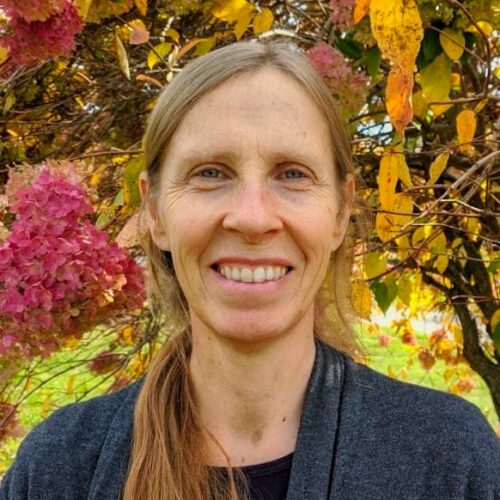
The beauty of the spontaneous movement of life

With Christelle Bonneau recorded on July 23, 2017.

Found our teachings useful? Help us continue our work and support your teachers with a donation. Here’s how.

Nowadays, for most of us, life is so full, so fast and dispersed in so many directions: jobs, partners, children, family, house, everyday duties, mobile phone, internet, responsibility, stress, tiredness, worries … and when we find a small space, we fill it with hobbies, friends, sports, TV and every other little thing we usually don’t get the time for.

And our body serves each one of theses actions. Every day, from morning to evening, our body follows our duties, desires and projections quietly and perfectly. Sometime it says “stop” by getting sick, when it’s out of strength and too oppressed by being on auto pilot.

What would it to be like to stop doing, for a short moment (a few minutes), or a long moment (a few hours or a few days)? How would it be to stop interfering and let the organic movement take place spontaneously? What could arise out of silence? Ideas? Intuition? A movement back to what’s essential? Energy? Life? Pleasure? Clarity? Questions?

What would be the movement of your breath, of your thoughts, your emotions, the dance of your body, the free expression of your voice? What would your colour be, your own language, your natural expression, your own creativity and artistic inspiration?

Let’s explore together a few tips and mindful practices we can use and develop every day to give a place to the natural movement of life inside ourself, through our artistic expression and into everyday life actions. Let’s explore how we could learn again to play, become really alive and be surprised…
Listen to the audio version below, or click here to download the mp3.

Discussion

Leave a Reply

Discover more from the Dharma Library

  • Daily Meditation Recordings, with Ulla Koenig – Week of July 10, 2023

    This week’s theme is “The Compassionate Heart”. Karuna, usually translated as compassion, is our hearts’ ability to relate with care towards ourselves, others and experience in general. Living in a complex world with imperfect others and self, an attitude and practice of compassion can be an immense support. But when misunderstood, it can equally turn into pity, generate overwhelm, make us lose balance and create friction with the concept of responsibility. We will therefore dedicate this upcoming week to an indepth exploration into the concept of compassion.

    Read More

  • How Family and Work Shape Our Character and so Influence Our Path

    Gregory writes: “Obviously our Dhamma practices infuse our lives (if not, something is amiss). We don’t usually talk about how this flows the other direction: the qualities we develop in our personal and professional lives strongly impact our Buddhist path. That’s what I’ll be speaking about, drawing examples from my own life in music, inventing,…

    Read More

  • Martine Batchelor

    What is this?

    In this session Martine leads a guided meditation on the question “What is this?”, and then explores this questioning practice as a means to encounter each moment with awareness and as a means of developing a stable and open heart.

    Read More

  • Whole body breathing to regulate your mind and body

    In this session Vidyamala introduces key areas of body awareness where mindful breathing can help to bring about regulation and calm in the body/heart/mind. She calls these the 5 B’s of the breath: Buttocks, Belly, Back, Back of the throat and Brain. She introduces the physiology of these areas and then leads a guided meditation….

    Read More

  • The Spectrum of Awareness Practices

      This session will explore different ways in which attention works and associated meditation practices: from focused awareness, to flexible awareness, to natural awareness. We’ll do a number of fun experiential practices in hopes of understanding a variety of ways to meditate and how we can refine our own practice. Diana draws from her latest…

    Read More