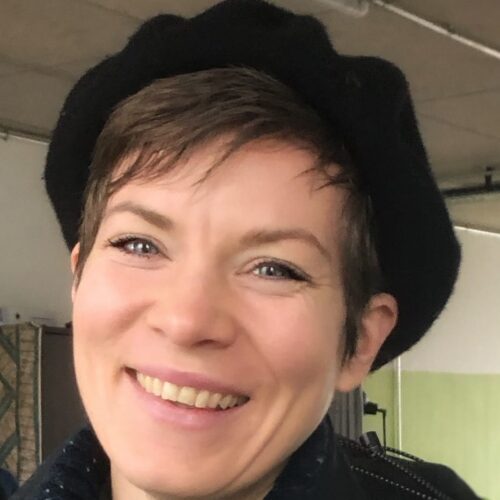
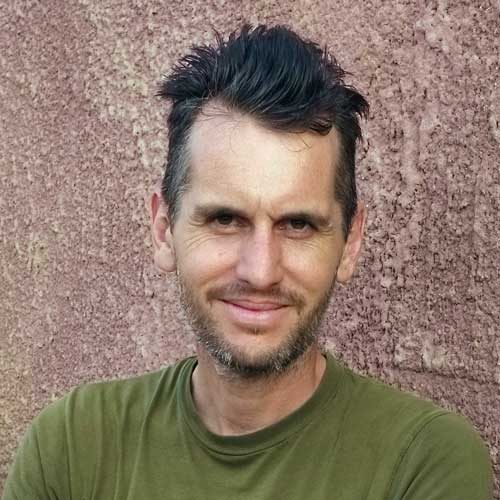
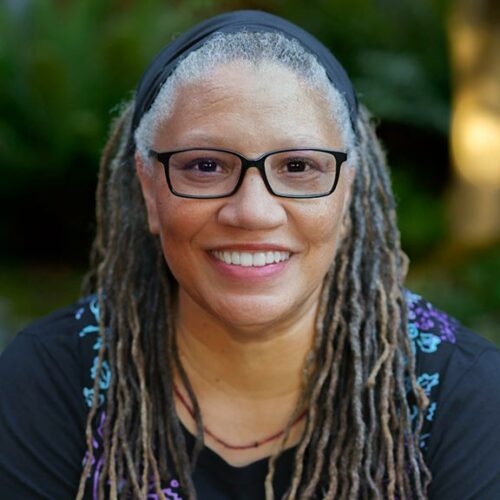
As spiritual practitioners faced with the enormity of our world’s problems, we are often left wondering how our individual practice might make a tangible difference in our world. In this gathering, we will explore how contemplative technologies designed for realization of personal freedom can – and must – be applied collectively, delving into a deeper truth of who we are and how to use that self-understanding to transform the world we share.
Discover more from the Dharma Library
-

Breathe! Delight in Meditation
Recorded :
April 14, 2019 How can we delight in our meditation? Learning to bring loving awareness to the breath, feeling the ebb and flow in real time as we sit quietly, is an art. The key is in our approach. Sometimes in practicing mindfulness of breathing, there can be an over-emphasis or insistence on focusing attention that drives delight…
-
Daily Meditation Recordings, with Ulla Koenig – Week of Nov 15, 2022
This week’s topic is Kindle the Flame. Metta practice, which nourishes the heart’s capacity for friendliness, brings many benefits. It softens our relationship to ourselves, nourishes us with a sense of connection, puts challenges into perspective and offers a safe ground from which we can meet life with a sense of care. We dedicate this week to (re)ignite the flame of metta, using as an inspiration the Karaṇīyamettā Sutta, a famous discourses of the Buddha.
-
Daily Meditation Recordings, with Sophie Boyer – Week of 28 April, 2025
We’re delighted to have Sophie Boyer guiding our Daily Meditation sessions this week. May they bring peace and depth to your practice.
This week’s theme is: Groundedness to Groundlessness
Grounding oneself in this very moment to realise that what we are looking for has never left us. It has always been here and is not bound to anything. It is an invitation to let life inform every moment without a “me” being in charge – a groundless home.
Sophie Boyer will lead our Daily Meditations this week, inviting us to engage with this paradoxical dynamic.Grounding ourselves in this very moment to discover that what we’re searching for has always been here. It has always been here and is not bound to anything. Sophie Boyer leads our Daily Meditations this week, inviting us to explore this beautiful paradox: finding a groundless home where life informs every moment without a separate “me” being in charge. Join us as we practice together in this space of gentle revelation and discovery.
Our Dharma Library thrives through collective generosity. Your donation helps sustain this offering for our entire community.
-
Speaking Out Against Injustice with Deep Listening and Loving Speech
Recorded :
June 3, 2018 How can we stand up for the values of social justice, inclusion, respect and dignity for all in a way that helps to heal division? How can we reach out to those who are different from us to help bridge the divide? In this session we explore the power of loving speech and deep listening,…
-
Daily Meditation Recordings, with Nathan Glyde – Week of October 24, 2022
This week’s topic is Subtilising Experience. The Dharma is a path to awakening. Our experience becomes more liberated as we awaken. Similarly, we can notice that our life progresses from the gross to the more subtle in awakening. A path of awakening freedom, then, is a path of subtilising: from perceptions of self and things in the world to space-time and even awareness, all phenomena transition from rigid and gross to fluid and refined, all the way to barely here at all.
-
Daily Meditation Recordings, with Caverly Morgan – Week of June 8
We’re very grateful to have Caverly Morgan hosting our Daily Meditation Series for North America. To find out more about Caverly, and to view her past recordings and contributions to Sangha Live, click here. Monday, June 8 Hope is the light of possibility, part 1 Wednesday, June 10 Remembrance: light becomes what it touches Friday,…
-
The Supramundane Nature of Emptiness
Recorded :
September 15, 2024 Emptiness can be a loaded word for lay practitioners. It can bring up a sense of isolation and annihilation. The dharma of emptiness, however, is a fundamental part of practice. Even in the most mundane tasks of our ordinary lives, we can access emptiness and feel the freedom that comes with it. It’s not about…
-
How to structure your practice in life
Recorded :
March 25, 2018 Shinzen guides you through his “See, Hear, Feel” focus technique. This technique is designed to be applicable in any life situation — driving a car, having a conversation, working out, puttering around the house…. After that he gives a dharma talk describing a systematic procedure for “monasticizing” daily life. The goal of this program is…