Use code SUMMERPRACTICE for a 25% discount on all On Demand Courses through August 31.

The practice of pleasure and delight (or the spiritual art of having fun).

With Martin Aylward recorded on April 22, 2018.

Found our teachings useful? Help us continue our work and support your teachers with a donation. Here’s how.

Dharma teachings importantly emphasise suffering, compassion, renunciation, desire, non-reactivity, peacefulness. All these are potent themes, yet ones which can make our practice feel overly heavy, unnecessarily serious, maybe even uptight!

Dharma practice equally points us towards a playful nature, light-heartedness and ease, delight and the capacity to really enjoy life. Especially when we can get bogged down in the circumstantial reality of both our personal struggles and of world affairs, we need uplift for the heart. Joy as resilience. A buoyant heart, that though it may get pushed under, cannot be sunk.

In this class, our founding teacher Martin reflects on ways to cultivate that buoyancy, to explore our capacity for pleasure, to enjoy the gift of life.

Listen to the audio version below, or click here to download the mp3.

Discussion

Leave a Reply

Discover more from the Dharma Library

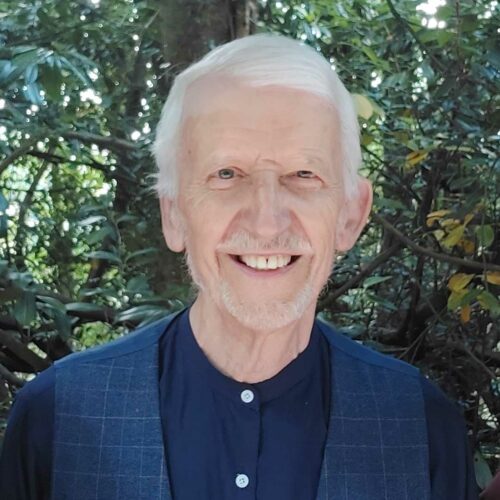
  • photo of Martin Aylward smiling

    Don’t be realistic. Be real

    Through the cultures within family, education and work, we are constantly orientated towards ‘realistic’ expectations and visions for our lives. Dharma practice asks us to abandon the realistic in favour of the real; listening deeply to life and to how things actually are, so as to respond wisely and lovingly, fully and freely. In this…

    Read More

  • Clear Presence, Sweet Absence

    Dharma practice encourages us to see the present moment clearly – to meet and respond to it well. What is here in this moment? Another dimension of practice is to learn to appreciate absence: What is this moment free from? Having skill in both these dimensions brings us closer to the joy and peace that…

    Read More

  • JD Doyle

    Practicing the Middle Way: Navigating Between Extremes

    The Buddha invites us to travel the Middle Path, between extremes. How do we navigate this path that leads to knowledge, understanding and liberation? We practice with mindfulness and kindness to meet our day to day experiences and our conditioning: societal, familial, cultural, and historical. Inviting in curiosity and diligence, we learn to practice to…

    Read More

  • Beyond the Self-Improvement Project

    It’s common to come to the spiritual path seeking relief from psychological suffering or emotional pain. The modern wellness industry presents mindfulness and meditation as the ultimate antidote to stress and personal foibles. Yet the Buddhist path is about something far deeper than stress reduction or having an agreeable personality. In this session, we’ll explore…

    Read More

  • Brian Dean Williams

    S.A.L.S.A.: Using Buddhist practice to Respond to “Spicy” Emotions

    Life presents plenty of opportunities to react unconsciously, often creating harm for ourselves and others. How might we apply our Buddhist practice to “Spicy” situations and emotions, in order to respond wisely? In this session, Brian will draw on Stephen Batchelor’s work and propose a working acronym of “S.A.L.S.A.” to navigate life’s spiciness and act…

    Read More

  • Meditating and speaking: simultaneously practicing Sila, Samadhi and Panna

    The communicative loop of listening and speaking forms a powerful karmic workshop. Language taps into our karmic archive, sankhara. It reaches other people and, if they are listening, there is mind-to-mind contact. Relational contact is intrinsically powerful because humans are intrinsically relational: when we engage together, our mutual responsiveness amplifies our efforts. Speaking and listening…

    Read More