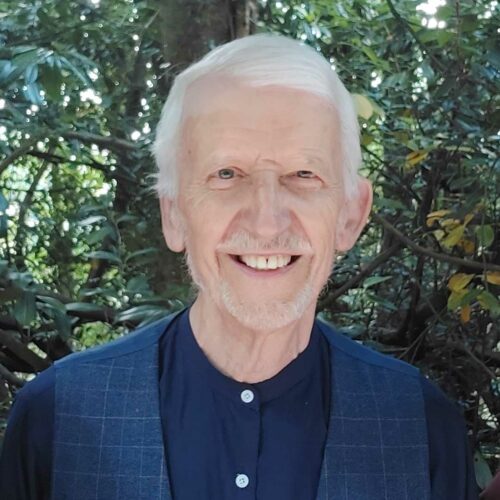
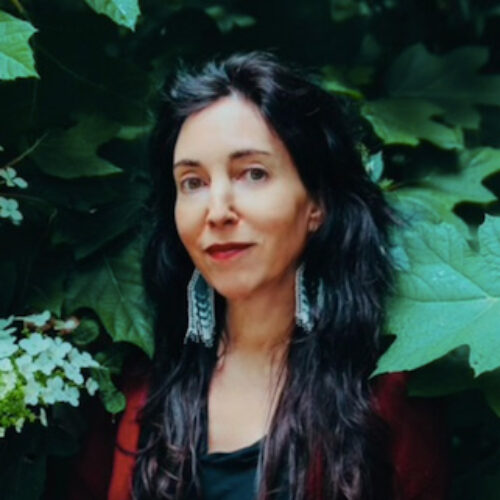
Drawing on Thich Nhat Hanh’s teaching on the different layers of consciousness, we will explore the nature of the seeds that sleep in the depths of our mind. We can each learn to be skillful gardeners of our own and others’ minds, watering the wholesome seeds and skillfully caring for the unwholesome ones. As we deepen in presence and familiarity with our minds, we can also begin to identify and heal larger blocks of suffering that lie under the surface, causing harm to ourselves and others. Kaira Jewel will share powerful examples of how we can begin to heal blocks of intergenerational suffering in the collective consciousness as well.
Discover more from the Dharma Library
-

S.A.L.S.A.: Using Buddhist practice to Respond to “Spicy” Emotions
Recorded :
June 9, 2019 Life presents plenty of opportunities to react unconsciously, often creating harm for ourselves and others. How might we apply our Buddhist practice to “Spicy” situations and emotions, in order to respond wisely? In this session, Brian will draw on Stephen Batchelor’s work and propose a working acronym of “S.A.L.S.A.” to navigate life’s spiciness and act…
-
Self-compassion.
Recorded :
June 7, 2015 Worldwide Insight talk from Tara Brach: “Self-Compassion”. Guided meditation, Dharma talk and Q&A.
-
Daily Meditation Recordings, with Sophie Boyer – Week of Nov 13, 2023
This week’s topic is “Entering Fall”. The autumn season can be a challenging (transitional) time of the year with darkness, rain, wind, mist, and a sense that the cycle of life is coming slowly to an end. Paradoxically, nature also offers intense scents and colors before heading into the coldness and barrenness of winter. This week is an invitation to experience autumn within us. A time to bring the mind momentarily to a stop and explore what can nurture and provide a refuge for the heart. Let’s explore the sparkling colors of autumn’s heart and mind together.
-
Freedom through focusing in.
Recorded :
September 25, 2016 Before this live session, Nina wrote: “I want to share a mindfulness technique this Sunday that’s particularly alive in my life right now. As a new mother I’ve experienced an increase in planning, anticipating, worrying, and fear. Before the birth of my daughter a few months ago I read a book by Karen Maezen Miller,…
-
Daily Meditation Recordings, with Christopher Titmuss – Week of 06 January, 2025
We are grateful to have Christopher Titmuss guiding our Daily Meditation sessions this week. May these sessions support and deepen your practice.
This week’s theme is: Each Moment, New Moment
A week of practice to begin the year, with reflections on beginnings, commitments and a free attitude to life.
Our Dharma Library thrives through collective generosity. Your donation helps sustain this offering for our entire community.
-
Settled Form, Steady Heart: Qigong for Mindful Presence
Recorded :
October 26, 2025 When our physical energy feels restless or flat, it becomes harder to meet our inner experience with care and attention. This is why embodied practices such as qigong and mindful breathing are valuable: they help settle our body, making it far easier for our heart to find a steadier, more skillful unfolding. Please join this…
-
Visions of a free life
Recorded :
July 16, 2017 Freedom is a central concern of all our lives, yet has many different manifestations, some of which run completely contrary to others. This class will explores the importance of social freedoms, inner freedom, personal and collective freedoms. We explore how different perspectives on free-ness shape how we practice; and how we understand life and our…
-
Luminous Darkness: A Path for Seeing Clearly from the Heart
Recorded :
October 2, 2022 One of the gifts of global uncertainty is that it requires us to recognize and release unconscious biases that have been passed down for generations. These include the perception that splits into opposites and values light over dark, speed over slowing down, productivity over attunement, and conclusion over not knowing. Awakening requires that we soften…