Use code SUMMERPRACTICE for a 25% discount on all On Demand Courses through August 31.

A Relational Dhamma

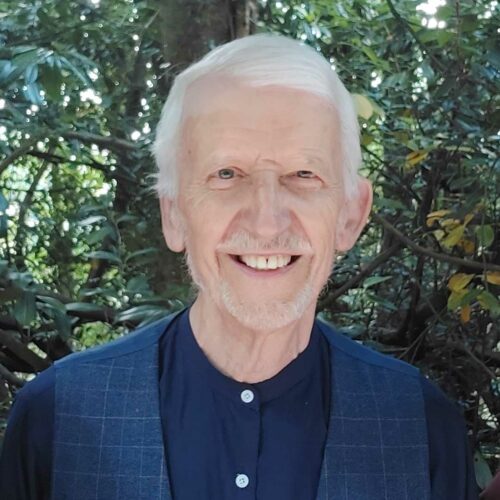
With Gregory Kramer recorded on October 17, 2021.

Found our teachings useful? Help us continue our work and support your teachers with a donation. Here’s how.

If humans are intrinsically relational creatures, how do we integrate this understanding with the Buddha’s teachings on suffering and its cessation? Relational suffering and craving? Dependent origination?

In this session, we explore the power and necessity of a relational understanding of the Buddha’s teachings. We discuss and practice relational aspects of the path, including the relational Vipassana practice of Insight Dialogue, and living a Dhamma-infused life of relatedness, through friendship and community.

Listen to the audio version below, or click here to download the mp3.

Discover more from the Dharma Library

  • Wiebke Pausch

    Daily Meditation Recordings, with Wiebke Pausch – Week of November 20, 2023

    This week’s topic is “May I be kind to myself”. May I be kind to myself – coming home to kindness and giving ourselves the love and care we need and deserve. What helps us to nurture this love – especially in the most challenging moments? We will explore how we can move towards more tenderness and open heartedness for ourselves and others.

    Read More

  • Nirmala Werner

    Daily Meditation Recordings, with Nirmala Werner – Week of May 22 – 27, 2023

    This week’s topic is “The Steam of a Cup of Tea: Teachings on Generosity, Gratitude and Renunciation”. Can we achieve happiness and wealth by giving? Can we experience abundance through simplicity? In this exploration, we’ll examine how such concepts are possible in today’s world by delving into certain aspects of the 10 Perfections (Paramis), all while embracing our perfectly imperfect nature.

    Read More

  • The dangers of selfie mindfulness.

    There is a growing tendency to imply or assume that all suffering is self-created. This is a naïve, even dangerous, view, removed from the middle way. The view ignores the teachings of non-self and the emptiness of self. Does self-inquiry, self-acceptance, self-compassion, self-interest and promotion of the Self promote self-indulgence? Is it any wonder that…

    Read More

  • Tuere Sala

    The Supramundane Nature of Emptiness

    Emptiness can be a loaded word for lay practitioners. It can bring up a sense of isolation and annihilation. The dharma of emptiness, however, is a fundamental part of practice. Even in the most mundane tasks of our ordinary lives, we can access emptiness and feel the freedom that comes with it. It’s not about…

    Read More

  • photo of Martin Aylward smiling

    Staying In, Going Inwards: Inner Resources for Indoor Life

    Martin, the founding and guiding teacher of Sangha Live, leads our regular Sunday session, looking at skilful ways to meet this time of confinement and ‘forced retreat’. He offers various reflections on caring for ourselves and others, and makes plenty of time to share and explore together as a Sangha, as we lean into this…

    Read More

  • Kaira Jewel Lingo

    Daily Meditation Recordings, with Kaira Jewel Lingo – Week of April 27

    We’re very grateful to have Caverly Morgan hosting our Daily Meditation Series for North America. To find out more about Caverly, and to view her past recordings and contributions to Sangha Live, click here. Monday, April 27 Resting in your own being Wednesday, April 29 Freeing the habit of separation Friday, May 1 Settling into…

    Read More

  • Nathan Glyde

    Daily Meditation Recordings, with Nathan Glyde – Week of April 4, 2022

    This week’s topic is A Sense of Essence. In his teachings the Buddha utilised the liberating yet frequently misunderstood concept of karma. Karma refers to how an action is carried out rather than the outcome of that action. This helps shift us away from a fixed self-view, on which we frequently pass judgment, and toward a freeing examination of activities. Asking us to inquire, “What, when I do it, will lead to my long-term well-being and happiness?”

    Read More