Use code SUMMERPRACTICE for a 25% discount on all On Demand Courses through August 31.

Letting go of fear; finding courage in the face of uncertainty.

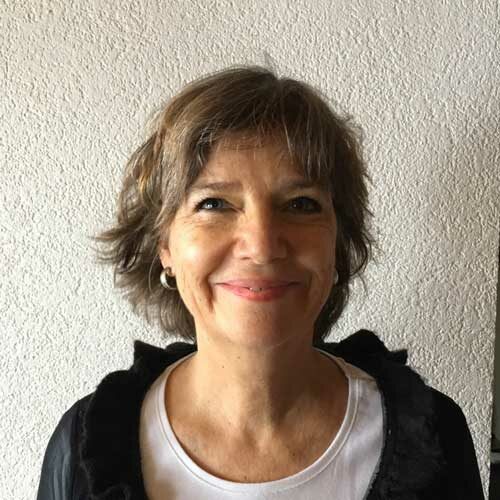
With Deborah Eden Tull recorded on March 5, 2017.

Found our teachings useful? Help us continue our work and support your teachers with a donation. Here’s how.

Even though we know fear does not serve us, we often allow it to stop or limit us. We might not even be aware of the ways it drives us and makes us smaller than we are. Though we might think we can control life, there is little we can actually control. If we are honest, we can say that the human experience involves some form of uncertainty and disappointment every single day. Death is the only thing we actually know with certainty will happen to us in this life.

In this session, Eden explores how meditation teaches us how to relate to fear in an entirely different way. It gives us the choice to see fear (False Evidence Appearing Real) clearly and to cultivate the equanimity and courage that is our birthright.

Listen to the audio version below, or click here to download the mp3.

Discussion

Leave a Reply

Discover more from the Dharma Library

  • Embodied Intentionality

    This session is an exploration of the ‘truths’ that might lead to conviction, to directed karma, to mindfulness as remembering-to-remember, and to the path to joy & beyond.

    Read More

  • The freeing of human consciousness: from seeing the world ‘out there’, separate and alien, to directly knowing, feeling, and living the intimacy of all things

    The Shurangama Sutra, which points out the foundations of Zen practice, discusses the essential nature of mind as the “primal essence of consciousness that brings forth all conditions.” Implied is the heart-mind (citta) both profoundly intimate with all things while at the same time free and independent of all things. How is it to live…

    Read More

  • Chris Germer

    The Power of Self-Compassion

    Most people are more compassionate toward others than themselves when things go wrong. However, burgeoning research shows that self-compassion is good for everybody. Fortunately, it can be learned.  How can we seamlessly bring self-compassion into meditation practice and daily life?  What are two secrets about self-compassion practice that make all the difference?

    Read More

  • The reality and experience of inner spaciousness

    A sense of spaciousness is needed for inner change but the person of history obstructs the space that is always there. As our practice deepens space starts to replace self images. The more we are embodied and present, timelessness and space become more experientially available to us. The now starts to stretch and become wide…

    Read More

  • Toby Sola

    The Out Breath: Unlocking Concentration

    Shodo Harada Roshi is known as a “teacher of teachers”, with masters from various lineages coming to sit with him in Japan. If you went to Harada’s monastery, the main meditation technique you’d learn involves slowing the out breath to last one minute. This drastically slows down your physiology, which in turn settles the mind.

    Read More

  • Pamela Weiss

    Awakening a Fierce Feminine Buddhism

    What would it look like to re-weave historical and archetypal women’s stories back into the fabric of Buddhist teachings? How could the inclusion of feminine qualities—receptivity, relationship, intuition and embodiment—transform the shape of practice? Join Pamela Weiss for an exploration on how to reimagine Buddhism through a feminine lens.

    Read More

  • Daily Meditation Recordings, with Ulla Koenig – Week of September 18, 2023

    This week’s theme is “Understanding Suffering”. Dukkha, often translated as suffering, is a central concept in the Buddha’s teachings. This has led some to view Buddhism as adopting a negative outlook on life. But is this true? Why did the Buddha emphasise suffering (dukkha) and what does he mean by this concept? This week of practice we will take an in-depth look into the first noble truth around dukkha. This exploration can help us cultivate compassion, as well as extending it to the larger community. It can free us from feelings of shame and a sense of failure, and bring a fresh perspective on our practice.

    Read More