This talk will explore the Three Refuges — Buddha, Dharma and Sangha — as sources of true refuge in difficult times. The teaching of the Refuges is found within all schools of Buddhism and offers clear guidance for responding to our beautiful, aching world with skill and kindness.
Discover more from the Dharma Library
-

Getting Free: The Infinite Middle of the MiddleWay
Recorded :
September 26, 2021 Dharma teachings are sublime, subtle, and onward leading: they are always going deeper and wider than we may first presume. Yet, they also meet us where we are, in the midst of our life. In this session we’ll explore two expressions of the middle-way we can cultivate and develop in our practice and in our…
-
On Teachings and Teachers
Recorded :
March 17, 2018 People often ask about the importance (or not) of working closely with a teacher. One can benefit greatly from general meditation instruction, but personalised guidance from someone who knows you and your practice well can be deeply helpful. In this session, Martin speaks about approaching teachers for guidance and about the dynamics of the teacher-student…
-
Reverence is the Nature of My Love
Recorded :
October 9, 2022 The Diamond Sutra, possibly the oldest text on deep ecology, teaches that there are four notions that separate us from life that we must throw away: the concepts of self, lifespan, humans, and living beings. In this session we will learn practices that enable us to go beyond this limited perception of reality to touch how interconnected with all life we are.
-
Daily Meditation Recordings, with Martin Aylward – Week of January 18, 2021
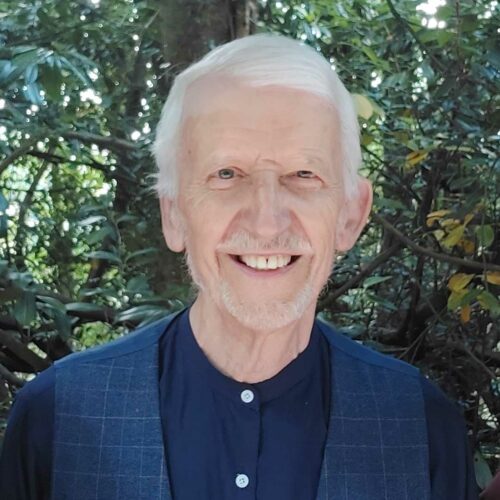
We’re fortunate that Martin Aylward has generously offered to lead our daily meditation sessions for Europe and the UK this week. To find out more about Martin, and view his other recordings on the platform, click here.
-
Daily Meditation Recordings, with Ayala Gill – Week of 09 February, 2026
This week’s theme is: Embodied Release, Effortless Renewal
The universe is endlessly generative. We resist its creative flow through contraction and collapse in the body, breath, mind and heart. With truly embodied release, renewal becomes effortless.
Our Dharma Library thrives through collective generosity. Your donation helps sustain this offering for our entire community.
-
Communication, Clarity and Consequences
Recorded :
September 30, 2018 Everything that we write matters. Everything that comes out of our mouth matters. Important communications require calm and insightful reflection afterwards. Wisdom and Liberation of the voice support each other. Clear communication with another (spoken or written) expresses itself freely from the extremes of positivity and negativity. The middle way shows itself in exploration of…
-
Tonight the Subject is Love
Recorded :
April 28, 2024 Love is the essential quality needed for the journey through life. The heart’s desire for deep connection fuels the journey, inspires and deepens our practice. This is why at some point we stop practicing to get anywhere, or to achieve anything… we just practice because we love it. Link to the YouTube video that we were…
-
Daily Meditation Recordings, with Martin Aylward – Week of April 13
We’re fortunate that Martin Aywlard has generously offered to lead our daily meditation sessions for Europe and the UK. To find out more about Martin, and to view his other contributions to Sangha Live, click here. Monday, April 13 Thought patterns Wednesday, April 15 Self-reinforcing thought loops Friday, April 17 Welcoming inner experience and also…





Discussion