Use code SUMMERPRACTICE for a 25% discount on all On Demand Courses through August 31.

Daily Meditation Recordings, with Nirmala Werner – Week of Jan 23 – 27, 2023

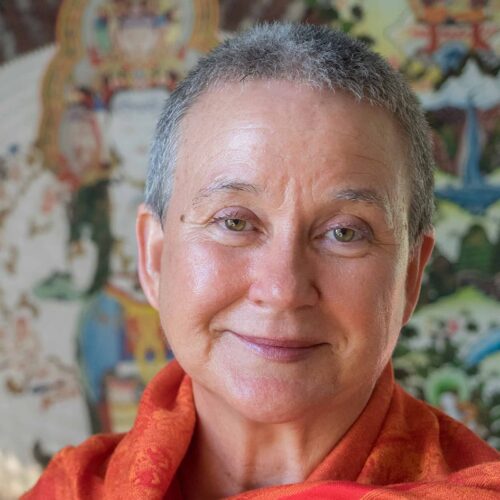
Nirmala Werner

Nirmala Werner

We’re fortunate that Nirmala Werner has generously offered to lead our daily meditation sessions. To find out more about Nirmala, and to view her other contributions to Sangha Live, click here. Recordings will be posted by the end of the day of the live session.


This week’s topic is “5 Doorways to Love”.


What hinders our love? Where are we blocked? Desire, anger, dullness, restlessness and doubt are the so-called 5 hindrances: qualities in the mind which obstruct mindfulness and love. At the same time, when we approach them wisely, they can serve as a beautiful guide towards liberation. During this week we will explore the treasures of these qualities for our meditation and our daily life.

Desire

January 23, 2023

Ill-will & Aversion

January 24, 2023

Dullness

January 25, 2023

Restlessness & Worry

January 26, 2023

Doubt

January 27, 2023

Discover more from the Dharma Library

  • Nathan Glyde

    Daily Meditation Recordings, with Nathan Glyde – Week of September 19, 2022

    This week’s topic is “Compose Yourself”. Dharma teachings appear to pull ‘us’ in two directions: on the one hand we pacify, renouncing and let go of everything, even of ourselves; on the other we energise, expanding our being into interconnection, to extend a limitless, inclusive welcome to all everywhere. But in actuality, we discover that there is no contradiction with this mismatch. For the well-composed practitioner, expanding goodwill and liberating release harmoniously and melodically intertwine.

    Read More

  • Daily Meditation Recordings, with Ulla Koenig – Week of September 18, 2023

    This week’s theme is “Understanding Suffering”. Dukkha, often translated as suffering, is a central concept in the Buddha’s teachings. This has led some to view Buddhism as adopting a negative outlook on life. But is this true? Why did the Buddha emphasise suffering (dukkha) and what does he mean by this concept? This week of practice we will take an in-depth look into the first noble truth around dukkha. This exploration can help us cultivate compassion, as well as extending it to the larger community. It can free us from feelings of shame and a sense of failure, and bring a fresh perspective on our practice.

    Read More

  • In Relation to Everything

    All of our dharma practice is done in relation to something. We’re essentially always in relation to whatever we’re paying attention to. And, we might say that, in order for our dharma practice to progress, we need to be in good relation to four things: the dharma, ourselves, our meditation object and, in general, to…

    Read More

  • Pamela Weiss

    Living by Vow

    To live by vow is a radical reorientation – from reactivity to response-ability, and from fear to love. This session will examine what it means to walk the spiritual path, and consider the importance of inspiration, aspiration and aligned, appropriate action. Together we will explore the tenderness and power of meeting the world from what…

    Read More

  • The practice of love in times of hate

    The Buddha taught hate cannot be conquered by hate, but only by love; that this is the eternal law. What does this mean in our lives, and in the contentious and divisive times we live in?

    Read More

  • Eugene Cash

    The Paradox of Being: Alive & Aware

    “The World is its Own Magic” – Suzuki Roshi As we practice and our understanding deepens, we’re often surprised by paradox. We begin to discover what the Laṅkāvatāra Sutra pointed to: Things are not what they seem… Nor are they otherwise. We intuitively know that there is more to life/reality then the usual, the familiar…

    Read More

  • Ralph Steele

    Using the five aggregates as a strategy.

    The aggregates are a reference to our sense of self. Working with form, feeling, perception, identification, and consciousness as we go through our daily lives will support equanimity. Most importantly, it will help us work with emotions with greater efficiency.

    Read More